



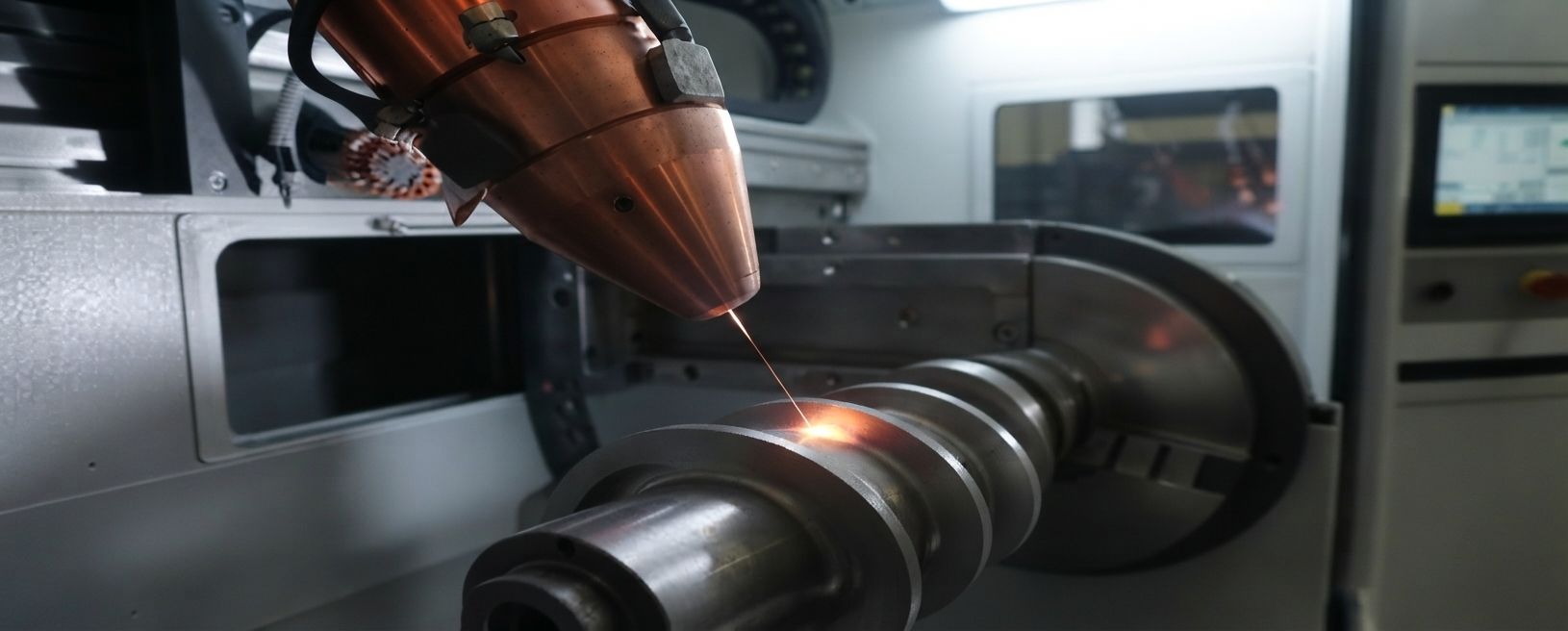
Repairing and restoring industrial parts with DED is one of the methods that can be used to restore worn or damaged sections of metal parts.
In this method, instead of manufacturing an entirely new part, material is added to the damaged section so that the required geometry and dimensions can be recreated and the part can return to use after finishing operations.
DED technology enables the restoration of specific areas through controlled material deposition onto the part surface and, in some applications, can be an alternative to completely replacing the part.
For example, if a section of an industrial shaft has moved outside its standard dimensions due to wear, it is not necessarily necessary to manufacture the entire shaft from scratch. If the condition of the part and material is suitable, the damaged section can be restored using DED, then machined to the final dimensions and prepared for reuse.
What Is Industrial Part Repair and Restoration with DED?
In industrial part repair and restoration with DED, material is added in a controlled manner to an area of the part that has experienced wear, corrosion, or damage.
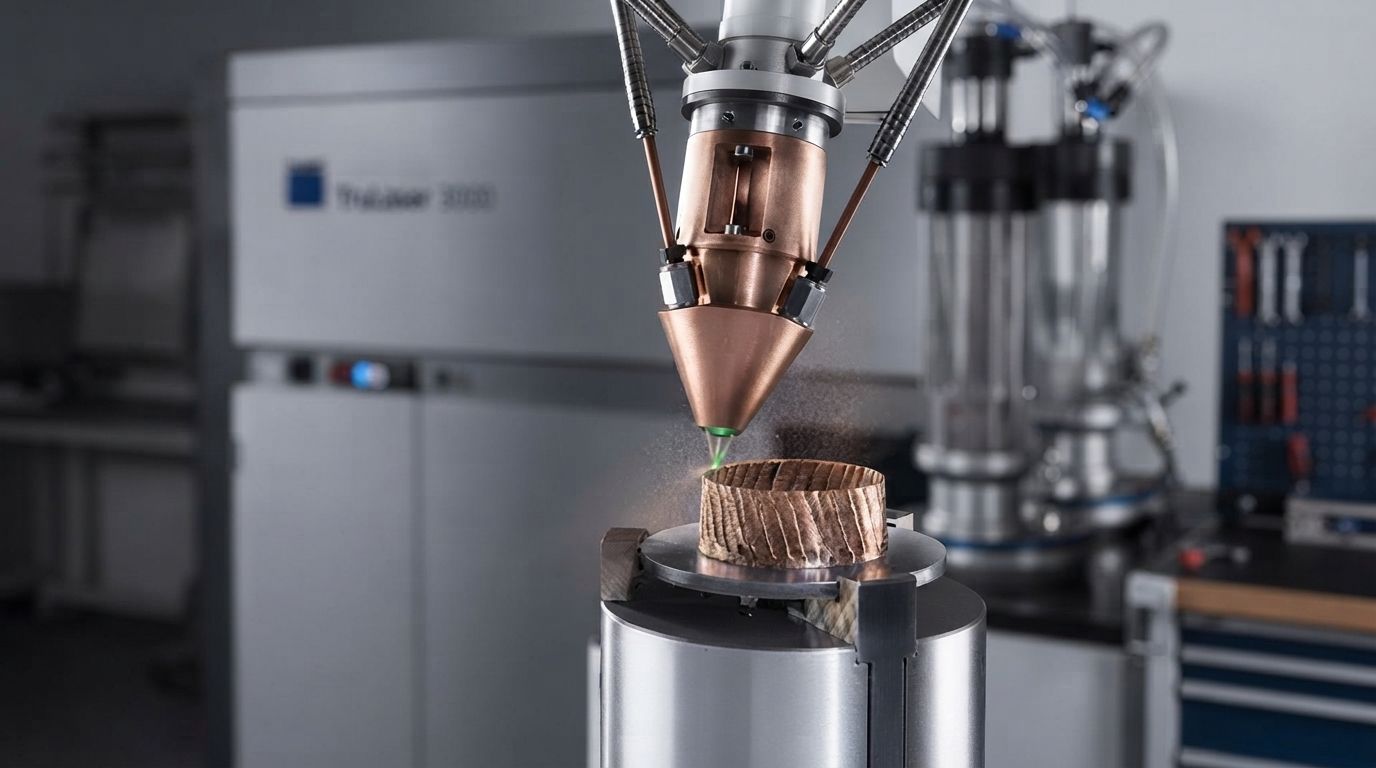
DED, or Directed Energy Deposition, is one of the metal additive manufacturing technologies in which the feedstock, usually in the form of powder or wire, is simultaneously delivered to the target area while energy is applied. The applied energy creates the necessary conditions for melting and bonding the material to the part surface.
The important point is that the goal of DED in repair applications is not necessarily to manufacture a part from scratch. In many projects, the sound portion of the part is preserved and only the damaged section is restored.
After material deposition, finishing operations such as machining, surface finishing, or dimensional inspection are usually performed so that the part reaches the required geometry and tolerances.
For this reason, DED can be considered for projects where the damage to the part is limited to a specific area and the sound portion of the part can be preserved.
Why Is DED Used for Industrial Part Repair?
In many industrial equipment systems, the failure of a part does not mean that every section of it is unusable. Only a surface, edge, seat, or specific section of the part may have experienced wear or damage due to prolonged operation.
Under such conditions, manufacturing an entirely new part may require more time, material, and production operations.
DED technology makes it possible to add material only to the required area.
- Preserving the Sound Portion of the Part
One of the most important features of restoring parts with DED is that the sound sections of the part can be preserved.
For example, suppose an industrial part has a sound main body, but one of its surfaces has worn due to continuous contact with another part. If repair is confirmed to be feasible, the worn area can be restored and, after reaching the final dimensions, the part can be reused.
- Reducing the Need to Manufacture the Entire Part
When only a portion of a part is damaged, adding material to that section can be different from manufacturing the entire part in terms of the production process.
This is particularly important for large parts or components whose production requires significant machining, preparation, or production time.
- Possibility of Restoring High-Value Parts
Some industrial parts have high value due to their dimensions, material, design, or specialized application.
If the damage has occurred only in a limited section, restoration can be considered as one of the available options; however, the final decision should be based on the condition of the part, material, extent of damage, and performance requirements.
How Does DED Technology Restore a Worn Part?
The DED repair process cannot be limited solely to the material deposition stage. Before that, it must be determined whether the part is actually repairable and whether it can meet the required performance requirements after repair.
In general, the process may include the following stages:
1. Part Inspection and Assessment
First, the damaged part is inspected.
At this stage, factors such as the location of the damage, amount of wear, cracks or corrosion, current dimensions, material, and operating conditions are considered.
It should also be determined how deeply the damage has progressed and whether the internal section of the part is still in suitable condition.
For example, if a shaft has experienced wear in a specific area, the amount of diameter reduction and the condition of the surface should first be examined.
2. Identifying the Area to Be Restored
After inspecting the part, the area that needs to be restored with new material is identified.
This stage is important because the goal of DED is not to add a large amount of material to the part without assessment. The material should be deposited in the required location and with controllable geometry.
3. Surface Preparation
Before material deposition, the part surface must be prepared for the process.
Preparation may include removing damaged sections, cleaning, initial machining, or creating a suitable geometry for deposition.
For example, if a part surface is severely worn or damaged, the unsuitable section may first be removed to create an appropriate surface for adding material.
4. Selecting the Appropriate Material
The material used for restoration must be compatible with the part and its final application.
The alloy type, required properties, operating conditions, wear or corrosion resistance, and metallurgical compatibility are among the factors that should be considered.
Material selection is not based solely on its availability, because the final performance of the part depends on the combination of the base material and deposited material, as well as the process conditions.
5. Material Deposition with DED
In the main stage, material is placed in a controlled manner on the specified area, and new layers are created on the part using the applied energy.
The movement path, material feed rate, energy input, and other process parameters should be adjusted according to the part and material.
The goal is to create the required volume of material on the damaged area with appropriate control.
6. Machining and Reaching the Final Dimensions
After deposition, the part surface usually has not yet reached the required final shape.
Therefore, finishing operations such as machining can be performed to achieve the required dimensions, geometry, and surface quality.
For example, when restoring a shaft, more material than the final dimension may be deposited on the surface, and the final shaft diameter can then be created through turning.
7. Quality Control of the Restored Part
Finally, the part should be inspected in terms of dimensions, surface condition, material bonding, and other project requirements.
The type of quality control depends on the application and sensitivity of the part and may include dimensional measurements or more specialized testing.
For parts operating under demanding industrial conditions, quality control is even more important because the restored part must be able to withstand the required operating conditions.
What Parts Can Be Repaired and Restored with DED?
The possibility of repairing every part with DED cannot be generally confirmed. Suitable parts for DED technology should be evaluated based on the material type, extent of damage, location of damage, and operating conditions.
However, this technology can be applicable to certain categories of parts.
Industrial Shafts and Axles
Shafts may experience wear in areas such as bearing or seal contact points due to prolonged operation.
If the condition of the part is suitable, the worn area can be restored and then machined to the required dimensions.
Example:
Suppose the diameter of a section of a shaft has decreased due to wear. Instead of manufacturing the entire shaft, the possibility of adding material to that area and then machining it to the standard dimension can be evaluated.
Industrial Molds and Tools
Some metal molds and tools experience wear or damage in specific areas due to continuous use.
If the main structure of the mold is still usable, restoring the damaged section can be considered as one of the available options.
Parts Used in Oil, Gas, and Petrochemical Equipment
Equipment in the oil, gas, and petrochemical industries may be exposed to pressure, temperature, corrosion, or wear.
Some metal parts of this equipment, when locally damaged, can be evaluated for repair using additive manufacturing methods.
However, the operating conditions and safety requirements of these industries mean that selecting a repair process requires detailed engineering assessment.
Steel and Mining Industry Parts
Equipment used in mines and steel plants generally operates under demanding conditions, and some of their parts are exposed to severe wear.
For example, sections of rotating components, tools, or process equipment components may require restoration after a period of operation.
In such applications, DED can be considered for evaluating the possibility of adding material to worn areas.
Power Plant Components
Components used in power plants may also experience wear or damage over time.
In repair projects, the possibility of restoring components instead of manufacturing them entirely can be considered under certain conditions.
What Types of Damage Are More Suitable for Industrial Part Repair with DED?
One important point is that DED is not suitable for every type of failure.
This technology is more likely to be considered when the damage is located in a specific section of the part and the main structure of the part remains in suitable condition.
Surface Wear
Wear is one of the conditions that can cause changes in the dimensions of a part.
For example, if a metal surface has lost part of its thickness or diameter due to continuous contact with another component, the possibility of restoring that surface can be evaluated.
- Localized Corrosion
In some parts, corrosion may affect only certain areas of the surface.
If the depth and extent of the corrosion are controllable, the possibility of restoring the damaged area by adding material can be evaluated.
- Dimensional Reduction in a Specific Area
Sometimes the part is generally in good condition, but one section has moved outside its designed dimensions due to prolonged operation.
Under such conditions, adding material and then machining it can be a potential approach for restoring the part's dimensions.
- Localized Damage or Wear
For parts where only a limited section has been damaged, localized repair may be more relevant than manufacturing the entire part.
When Is DED Repair Preferable and When Should a New Part Be Manufactured?
The choice between repairing a part and manufacturing a new one should be based on the condition of the part, cost, time, part value, extent of damage, and performance requirements.
Part or Project Condition | Option That Can Be Considered |
|---|---|
Damage limited to a specific section | Repair and restoration with DED |
Majority of the part remains intact | Localized restoration |
High-value or specialized part | Evaluate repair feasibility |
Need to modify geometry or add material | DED can be considered |
Extensive damage or structural failure | Evaluate manufacturing a new part |
Need for a large number of new parts | Compare DED with an appropriate manufacturing method |
For example, if a large and expensive part has wear only on one surface, evaluating repair can be appropriate. However, if a large portion of the part's structure is damaged, manufacturing a new part may be a more suitable option.
Therefore, repair should not automatically be considered a definitive replacement for manufacturing a new part simply because DED technology is being used.
Benefits of Industrial Part Repair and Restoration with DED
Using DED in repair projects can provide certain benefits, although the extent of these benefits depends on the type of project and the condition of the part.
1- Reducing Material Requirements
In localized repair, material is mainly added to the damaged area, and the entire part does not need to be manufactured from the beginning.
2- Preserving the Base Part
If the majority of the part is intact, it can be preserved while the damaged section is restored.
3- Suitable for Large Parts
In some projects, the size or value of the part makes localized repair worth considering.
4- Ability to Restore Geometry
DED can provide the ability to deposit material along specified paths, after which machining can be performed to achieve the final geometry.
5- Ability to Be Used for Both Repair and Manufacturing
DED technology is not limited to repair applications. The same material deposition capability can also be used to manufacture parts, add features to a part, or produce sections of a product.
Limitations and Important Considerations in Part Restoration with DED
Despite the benefits of this method, using DED does not mean that it is suitable for every part.
1- Part Material and Added Material
The compatibility between the base material and the material that is going to be added is highly important.
2- Extent and Type of Damage
Extensive damage, deep cracks, or structural problems may create different conditions compared with surface wear.
3- Control of Process Parameters
Process parameters should be adjusted according to the material and application. Improper control can affect the quality of the restored area.
4- Need for Post-Deposition Operations
Deposition is generally not the end of the process. Depending on the application, machining, finishing, or quality control may be required.
5- Engineering Assessment Before Repair
Before making a decision, it must be determined whether the part can meet the required performance requirements after restoration.
Difference Between DED Repair and Traditional Restoration Methods
Traditional methods for repairing metal parts can include processes such as welding, cladding, or machining.
DED is also not a single solution for every project and should be evaluated alongside other repair methods.
The main difference is that DED provides the ability to add material in a controlled, layer-by-layer manner.
For example, if a specific area of a part requires a defined volume of additional material, the deposition path can be planned based on the required geometry.
The choice between DED and other methods depends on factors such as the part material, type of damage, geometry, required properties, and available equipment.
The Role of Reverse Engineering in Industrial Part Restoration
Sometimes complete design information for repairing a part is not available.
The part drawing may not exist, or a component that has been used in a production line for many years may no longer be manufactured by the original manufacturer.
Under such conditions, reverse engineering can help determine the geometry and dimensions of the part.
For example, the existing part can first be scanned or measured, its geometric information can be reconstructed, and then the damaged area can be identified for the repair process.
In this situation, combining reverse engineering and DED can be considered for projects where the initial design information is limited.
Is DED Repair Always Cost-Effective?
Simply using an advanced technology does not mean that the process is necessarily more economical.
Economic evaluation should consider factors such as the value of the part, cost of manufacturing a new part, production time, extent of damage, material consumption, machining operations, and quality control.
For example, if a standard and inexpensive part is readily available on the market, repairing it may not be economically justified.
However, if a part is large, specialized, or difficult to obtain and manufacturing a replacement requires significant time and cost, evaluating the possibility of repair can be more important.
Therefore, economic evaluation should be performed separately for each project.
Industrial Part Repair and Restoration with DED in Different Industries
DED repair applications are not limited to a single industry.
- Oil, Gas, and Petrochemical Industry
In these industries, some equipment and components operate under demanding conditions. Repairing specialized parts or restoring worn sections can be considered in maintenance projects.
- Steel and Mining
Severe wear is a common challenge for some equipment in these industries. Therefore, restoring worn sections of parts can be one of the areas in which DED is evaluated.
- Power Plants
Power plant components may be affected by temperature, pressure, wear, or other operational factors over time. In some projects, the possibility of repairing components instead of manufacturing them entirely can be considered.
- Aerospace Industry
In the aerospace industry, the high value of certain components and the importance of weight and performance have led to advanced repair and additive manufacturing methods receiving attention. However, the quality requirements and standards in this industry are very stringent.
- Heavy Industries
In heavy machinery and equipment, some large and expensive components may experience localized damage due to prolonged operation. In such cases, evaluating the possibility of restoration with DED can be part of the repair decision-making process.
What Information Is Needed to Evaluate the Possibility of Repairing a Part with DED?
If you intend to evaluate the possibility of repairing an industrial part with DED, the initial project information is highly important.
The following information can generally be useful for an initial assessment:
- Part type and material
- Overall part dimensions
- Location and type of damage
- Extent of wear or corrosion
- Part images
- Drawing or 3D model, if available
- Part operating conditions
- Operating temperature and pressure, when relevant to the application
- Production quantity or required number of parts
- Material intended for restoration
- Dimensional and performance requirements
The more accurate the initial information, the more accurately the possibility of using DED can be evaluated.
Industrial Part Repair and Restoration Services with DED at Vandad Sanat
If you are dealing with worn or damaged parts in your industrial projects, evaluating the possibility of restoring them with DED technology can be one of the options to consider. Selecting suitable equipment for this process also depends on factors such as part type, material, dimensions, extent of damage, and production requirements.
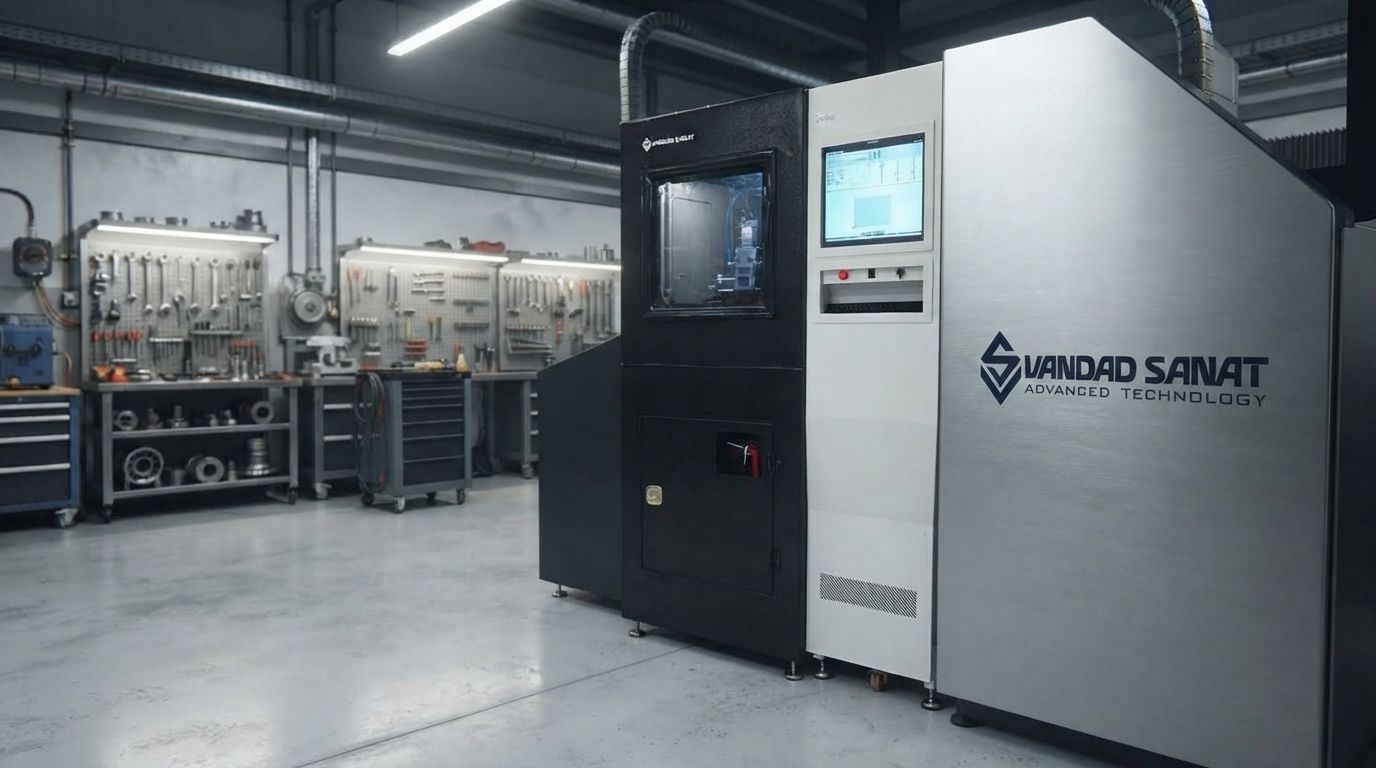
Vandad Sanat operates in the field of additive manufacturing and the production of equipment related to metal 3D printing and provides metal 3D printers for industrial applications. These machines can be considered for projects related to the manufacturing, repair, and restoration of metal parts.
For more information, contact Namavaran Vandad Sanat or complete the form below, and our experts will contact you as soon as possible:
- Phone number: 09102017107
Conclusion
Industrial part repair and restoration with DED is a method for adding material to specific sections of damaged metal parts.
This method can be considered as a repair option when the majority of the part is intact but a specific area has experienced wear, corrosion, or dimensional reduction.
The repair process generally begins with part assessment and surface preparation. The material is then deposited onto the required area using DED technology, followed by finishing operations and quality control.
However, DED is not a universal solution for all parts. Material, geometry, extent of damage, operating conditions, material used, and the repair cost compared with manufacturing a new part must all be considered in the decision-making process.
Frequently Asked Questions
1- What parts are suitable for industrial part repair with DED?
This method can be considered for parts where a specific section has experienced wear, corrosion, or dimensional reduction while the main portion of the part remains usable.
2- Can a completely damaged part be repaired with DED?
Not necessarily. The possibility of repair depends on the type and extent of damage and the structural condition of the part and should be evaluated from an engineering perspective.
3- Is machining required after repairing a part with DED?
In many projects, finishing operations such as machining are required to achieve the final dimensions, geometry, and surface quality.
4- Is DED used only for repairing parts?
No. In addition to repair and restoration, DED can also be used for manufacturing parts, adding material to parts, and other production applications.
5- Is repairing a part with DED always less expensive than manufacturing a new part?
No. The economic justification depends on the project conditions, part value, extent of damage, cost of manufacturing a replacement, material consumption, and finishing operations.
نظرات
0 نظر
دیدگاهی ثبت نشده.