Metal 3D printing is one of the additive manufacturing methods in which a part is built layer by layer based on a digital model.
Unlike traditional methods, in which parts are generally produced by removing or shaping material, additive manufacturing places material only in the required areas.
To better understand this technology, you should first become familiar with basic concepts such as the metal 3D printer, materials used, and the part production process.
Understanding these concepts helps you better recognize the differences between metal 3D printing and conventional manufacturing methods.
What Is a Metal 3D Printer?
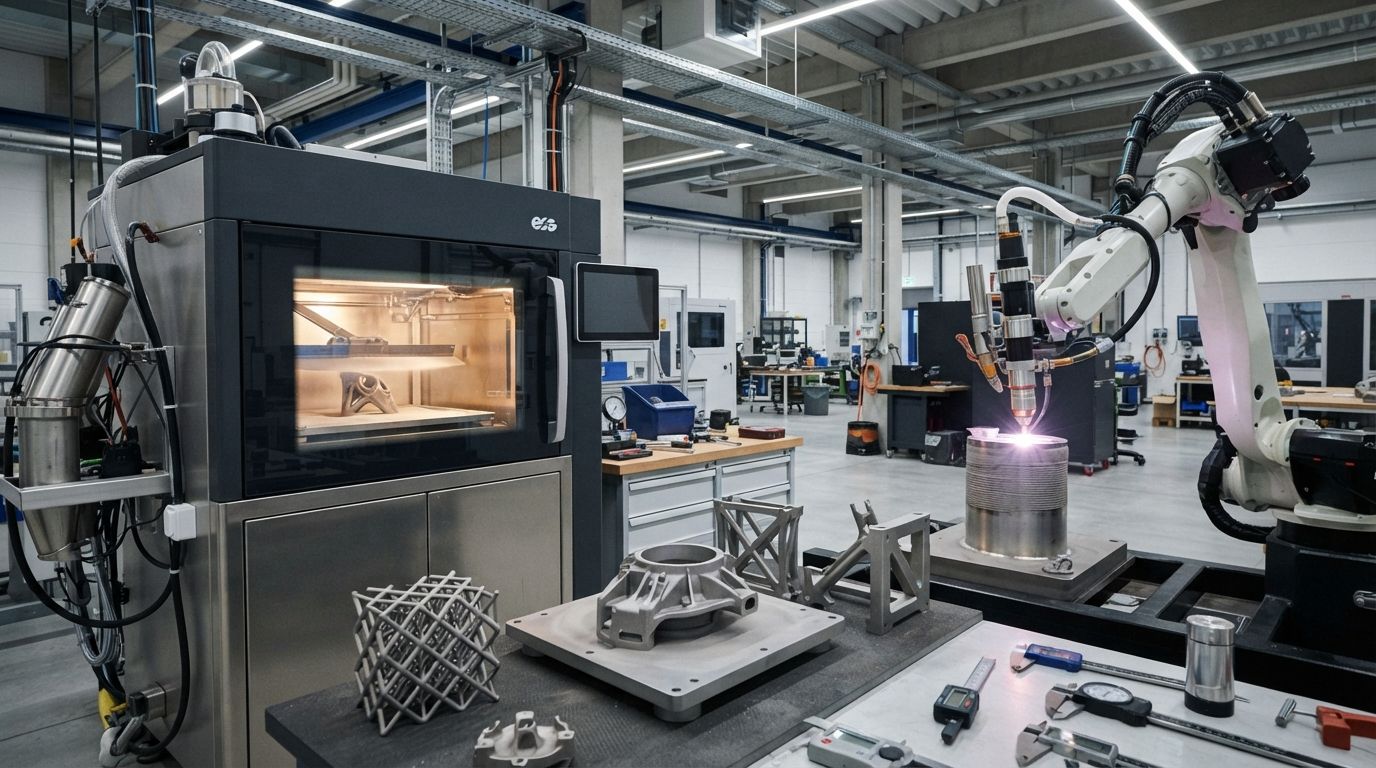
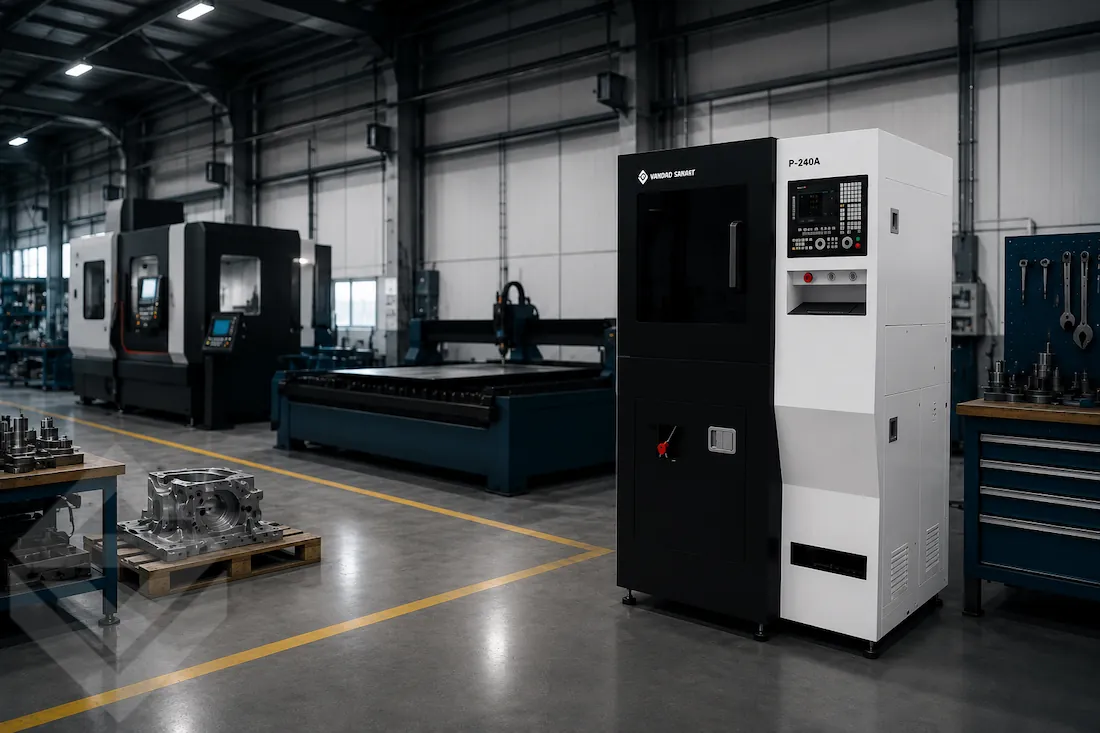
A metal 3D printer is an industrial machine that uses a 3D model to produce metal parts. Depending on the technology used, the raw material can be in the form of metal powder or wire, and the machine uses an appropriate energy source to convert it into the final part in a controlled manner.
The type of technology used directly affects the manufacturing process, material type, part dimensions, and application of the machine. Therefore, becoming familiar with different metal 3D printing technologies is one of the fundamental concepts for entering this field.
Additive Manufacturing and Metal Part Production
Additive manufacturing refers to a group of methods in which a part is produced by gradually adding material. This method makes it possible to produce complex geometries, prototypes, and certain parts that are difficult or time-consuming to manufacture using conventional methods.
The overall production process also begins with 3D design. After preparing the file and setting the process parameters, the part is manufactured. Understanding this process is important for learning how a metal 3D printer works and the factors that affect part quality.
Different Metal 3D Printing Technologies
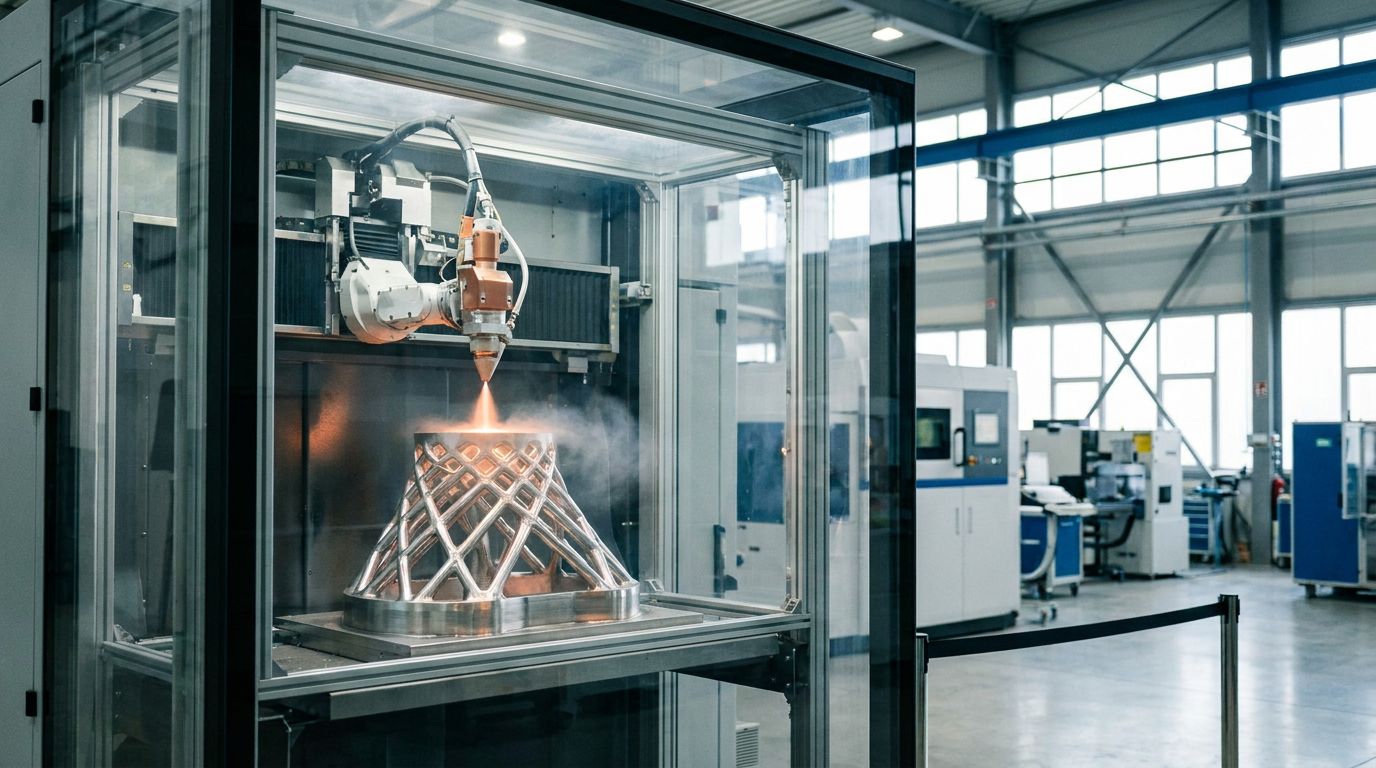
Metal 3D printing is not limited to a single technology, and different methods are used to manufacture metal parts. Technologies such as DED are among the well-known methods in this field, but their material and energy delivery methods, manufacturing processes, and applications differ from one another.
Therefore, understanding the differences between these technologies and becoming familiar with the advantages and limitations of metal 3D printing can provide a more accurate perspective for selecting the appropriate method.
Materials and Parts That Can Be Produced
The type of metal used is another fundamental concept in metal 3D printing. Steel, aluminum, titanium, and some other alloys can be used in the manufacturing process, depending on the technology and equipment being used.
Ultimately, the choice of technology and raw material should be based on the type of part, geometry, required properties, production volume, and final application.
This makes understanding the fundamentals a suitable starting point for exploring the industrial applications and equipment used in metal 3D printing.
Vandad Sanat, a leader in precision machine tool manufacturing, offers industry-specific solutions for aerospace, mobility, die & mold, medical, semiconductor, energy, and education. With process inte...